
Program
Biosensors 2027 is a three-day event consisting of daily plenary presentations followed by parallel sessions comprising a rigorously refereed selection of submitted papers. In addition to invited lectures, selected oral contributions will be included as extended keynote presentations.
To submit abstracts please visit the Abstract Submission page
The Congress will also include two optional summer schools immediately before the Congress.
Plenary lectures
Amy Shen, Okinawa Institute of Science and Technology Graduate University, Japan Presentation title: microfluidic technologies for biosensing, environmental monitoring, and diagnostics Kazunori Ikebukuro, Tokyo University of Agriculture and Technology, Japan Presentation title: DNA functions as sensor, actuator and signal generator. Róisín Owens, University of Cambridge, UK Presentation title to be announced Theodore Goodson, University of Michigan, USA Presentation title: Investigations of quantum imaging in biological systems Wei Gao, California Institute of Technology, USA Presentation title (provisional): ody-Interfaced Biosensors. Yi-Lun Ying, Nanjing University, China Presentation title: Nanopore electrochemistry for single-molecule peptide sequence identification
Summer Schools
Biosensors for One Health — Bridging animal, human, agricultural, and environmental diagnostics
At this World Congress summer school, organised by Frances Ligler and Sanjiv Sharma, we have assembled leading researchers from around the world who will first introduce the field and then invite active participation in designing biosensors for One Health.
One Health is not a set of separate application areas, but a single measurement problem seen from multiple directions. The same recognition chemistry and the same transduction principle might be pointed at a patient, at livestock, at crops, or at wastewater — producing data continuously or at discrete timepoints, in wearable formats, deployed on drones in air or water, or embedded in point-of-need systems. What changes is what the sample matrix, the cost ceiling, the calibration burden and the regulatory route demand — and what kind of information is needed, in each case, to make it actionable. It is these constraints, more than the underlying biology, that usually decide whether a device is ever deployed. That framing turns One Health from a policy slogan into a set of concrete design decisions — ones that early-career researchers can act on immediately.
The morning session opens with a lecture framing the One Health concept and what it demands of a biosensor, followed by tutorials covering human and veterinary diagnostics, precision agriculture, environmental pollutant monitoring, wastewater surveillance, and food safety. In the afternoon, participants will work in teams — mentored by the morning's speakers — to develop a One Health application of their own: defining the unmet need, the end user, what is being measured and in what matrix, the cost ceiling, the route to deployment, and potential funding sources. Each team then pitches their concept to the room as a business case, in a short five-minute slot with questions to follow.
Organisers

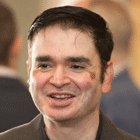
Details of the second summer school will be added here shortly.
Conference app
An app will be available for the 37th Anniversary World Congress on Biosensors and will appear in the Elsevier Conference App shortly before the conference.
Install the Elsevier Conferences app on your phone or tablet by following the links below or by searching for "Elsevier Conferences" in the App Store or on Google Play. Once you have installed this app, you will find the 37th Anniversary World Congress on Biosensors App (when available) towards the top of the screen. Simply tap the event and select ‘Install’ to download the interactive conference program to your device.
To download the app please follow the below links:
The conference app will include information on presentations, speakers, exhibitors and more. It will allow you to plan what presentations to attend, add notes to the program, make lists via the To Do feature and add custom tags to presentations and exhibitors.
Instant access to all conference information
Have instant access to complete information for each presentation, session, person, exhibitor and sponsor – wherever you are.
Create your personalised program
Pick and choose sessions from within the sessions to build your own program.
Keep track with to-dos, notes and tags
You can add a Note to anything in the program. Make lists via the To Do feature and add custom Tags to presentations, people and exhibitors.
Share content more easily
Sharing content with others is easy – simply export to email or share via Facebook or Twitter direct from the App.
Internet access is only required once to download the conference app. After that, all of the data is available in the app, making it easy to access while traveling or at sites without a WiFi connection. You will require internet access to view the abstracts and to receive updates.